


Microsoft OneDrive comes pre-installed with Windows 11 and Windows 10 and appears in File Explorer by default. If you don’t use Microsoft’s cloud storage service, you can pause syncing, quit the OneDrive app, unlink your account, stop OneDrive from launching at startup, or uninstall it completely.
This guide explains how to turn off OneDrive on Windows, whether you simply want to stop OneDrive from syncing files or remove it permanently from your PC.
Why Remove OneDrive From a Windows PC?
There are several reasons why you might want to disable or remove OneDrive:
- You don’t use OneDrive and prefer storing files locally.
- OneDrive automatically backs up your Desktop, Documents, or Pictures folders.
- You keep seeing sync notifications or storage warnings.
- You use another cloud storage service such as Google Drive or Dropbox.
- OneDrive runs in the background and launches every time Windows starts.
- You don’t want your files syncing to the cloud.
Depending on your needs, you can temporarily pause OneDrive, stop it from launching automatically, disconnect your account, or uninstall it completely.
Ways to Turn Off OneDrive on Windows
| If you want to… | Use this method |
|---|---|
| Temporarily stop syncing files | Pause OneDrive syncing |
| Stop OneDrive until you open it again | Quit OneDrive |
| Disconnect your Microsoft account | Unlink this PC |
| Prevent OneDrive from opening at startup | Disable OneDrive in Startup apps |
| Remove OneDrive completely | Uninstall OneDrive |
How to Stop OneDrive From Syncing on Windows 11/10
If you only want to temporarily turn off OneDrive sync, pausing file syncing is the quickest option.
Pause OneDrive Sync on Windows 11
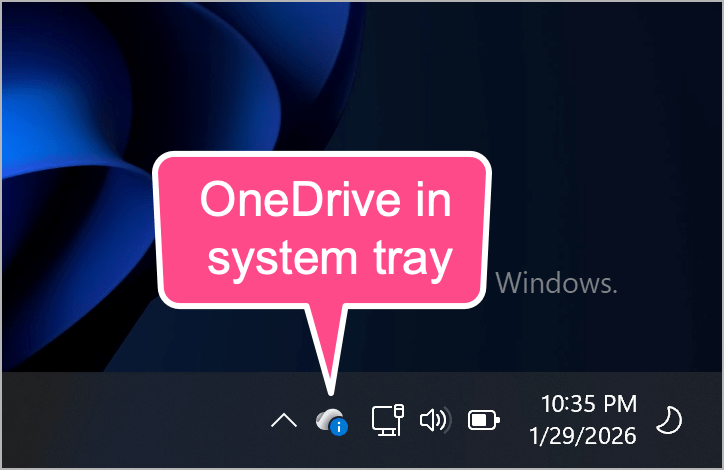
- Click the OneDrive cloud icon in the system tray.
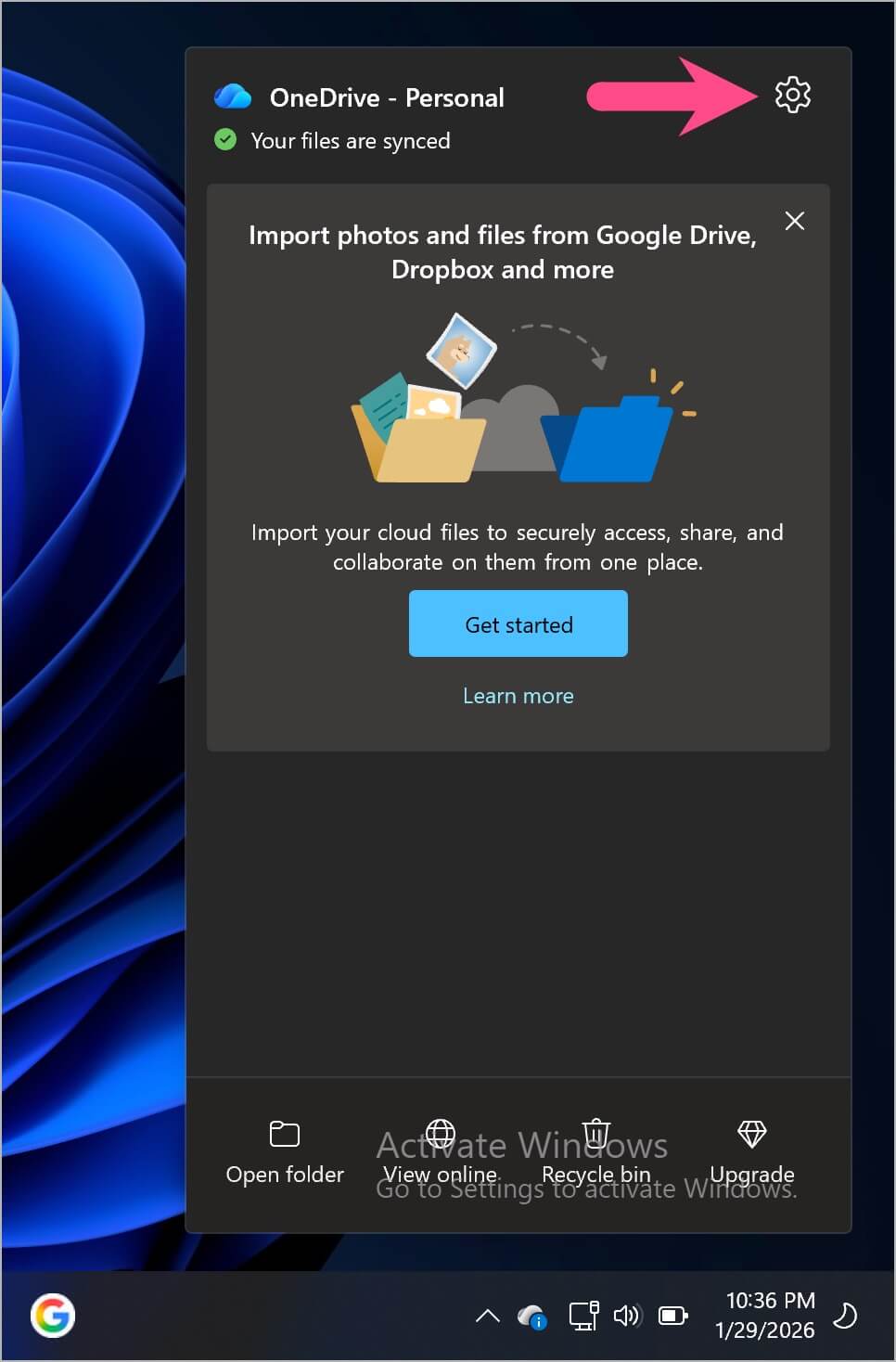
- Click the Settings (gear) icon.
- Select Pause syncing.
- Choose 2 hours, 8 hours, or 24 hours.
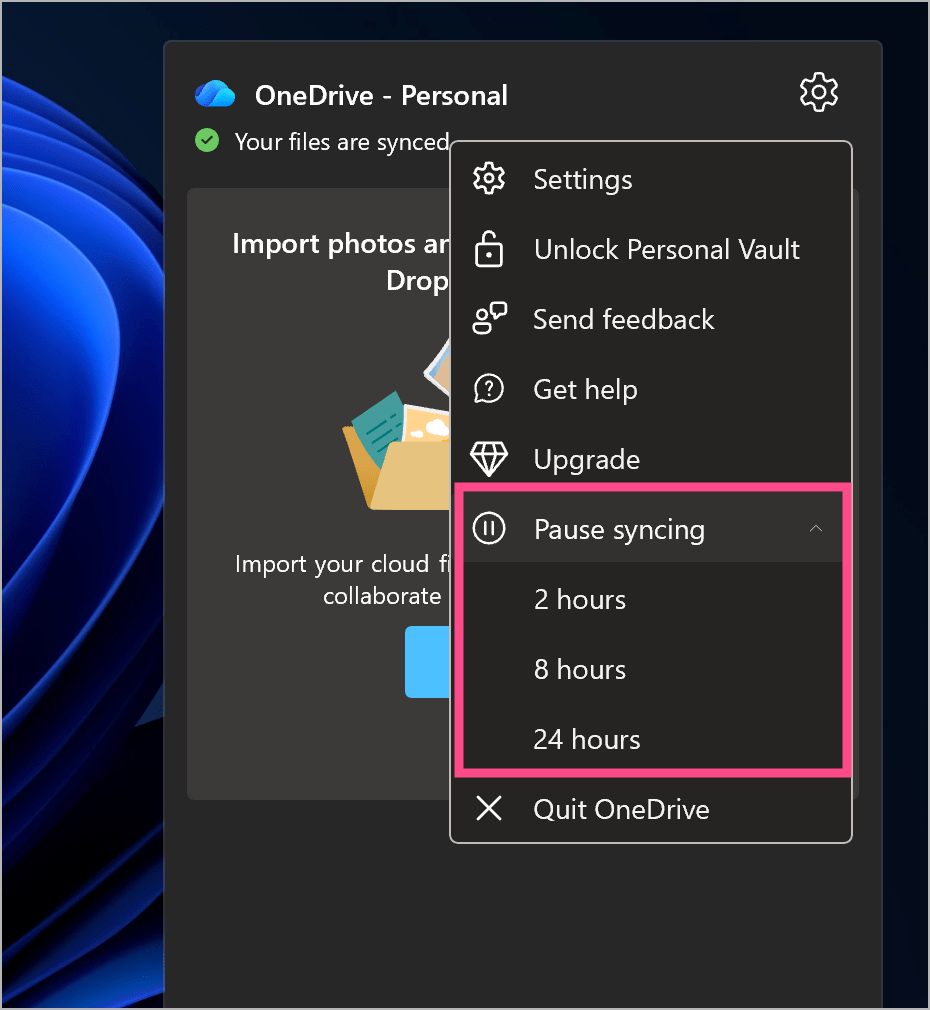
Once paused, OneDrive stops syncing and backing up files until the selected time expires or you manually resume syncing.
Stop OneDrive From Backing Up Your Desktop
If you don’t want your Desktop files backed up to OneDrive, you can exclude the Desktop folder from OneDrive backup.
Turn Off Desktop Sync in OneDrive
- Click the OneDrive icon in the taskbar.
- Click the gear icon and open Settings.
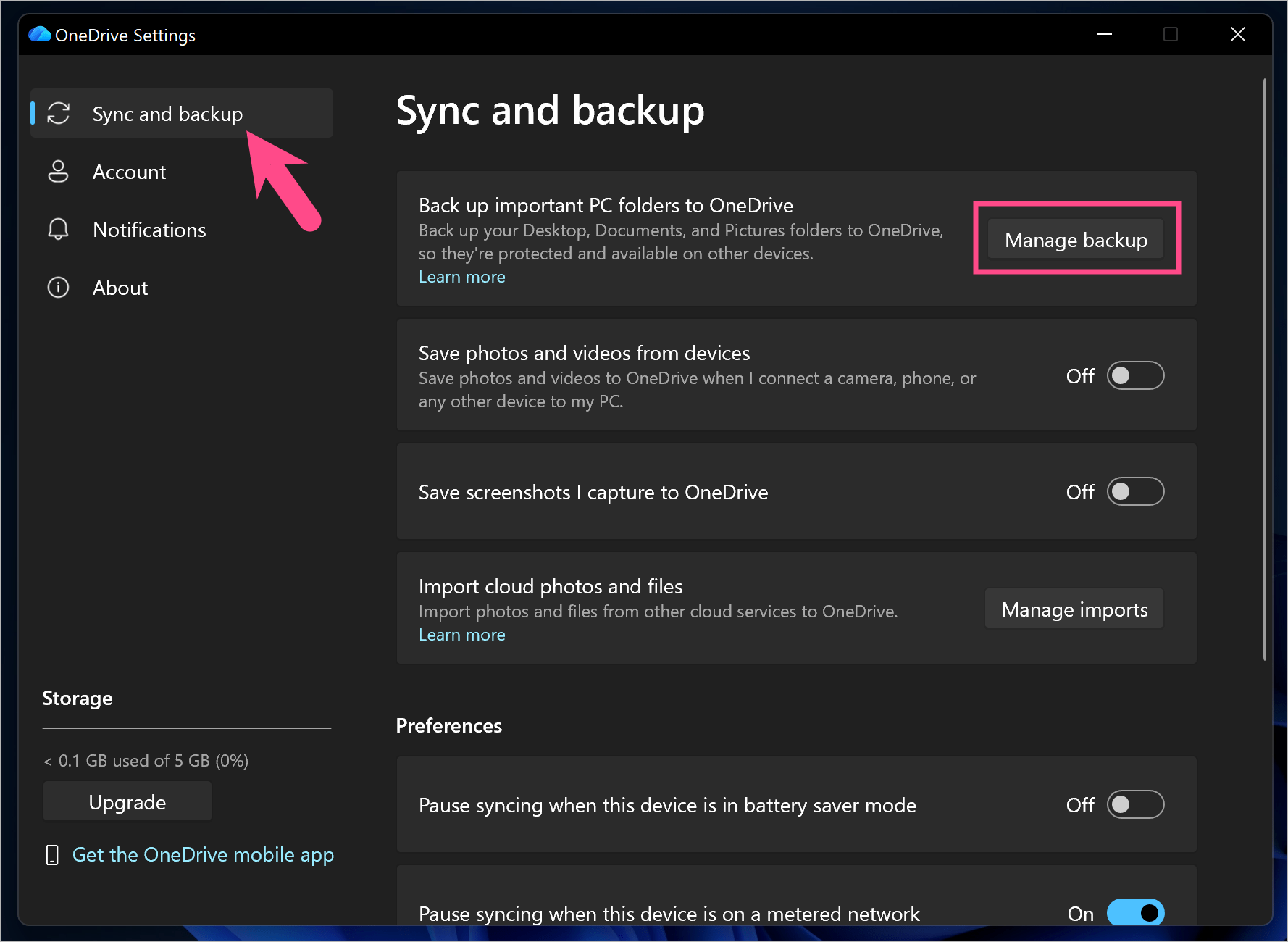
- Go to Sync and backup.
- Click Manage backup.
- Turn off the toggle for Desktop.
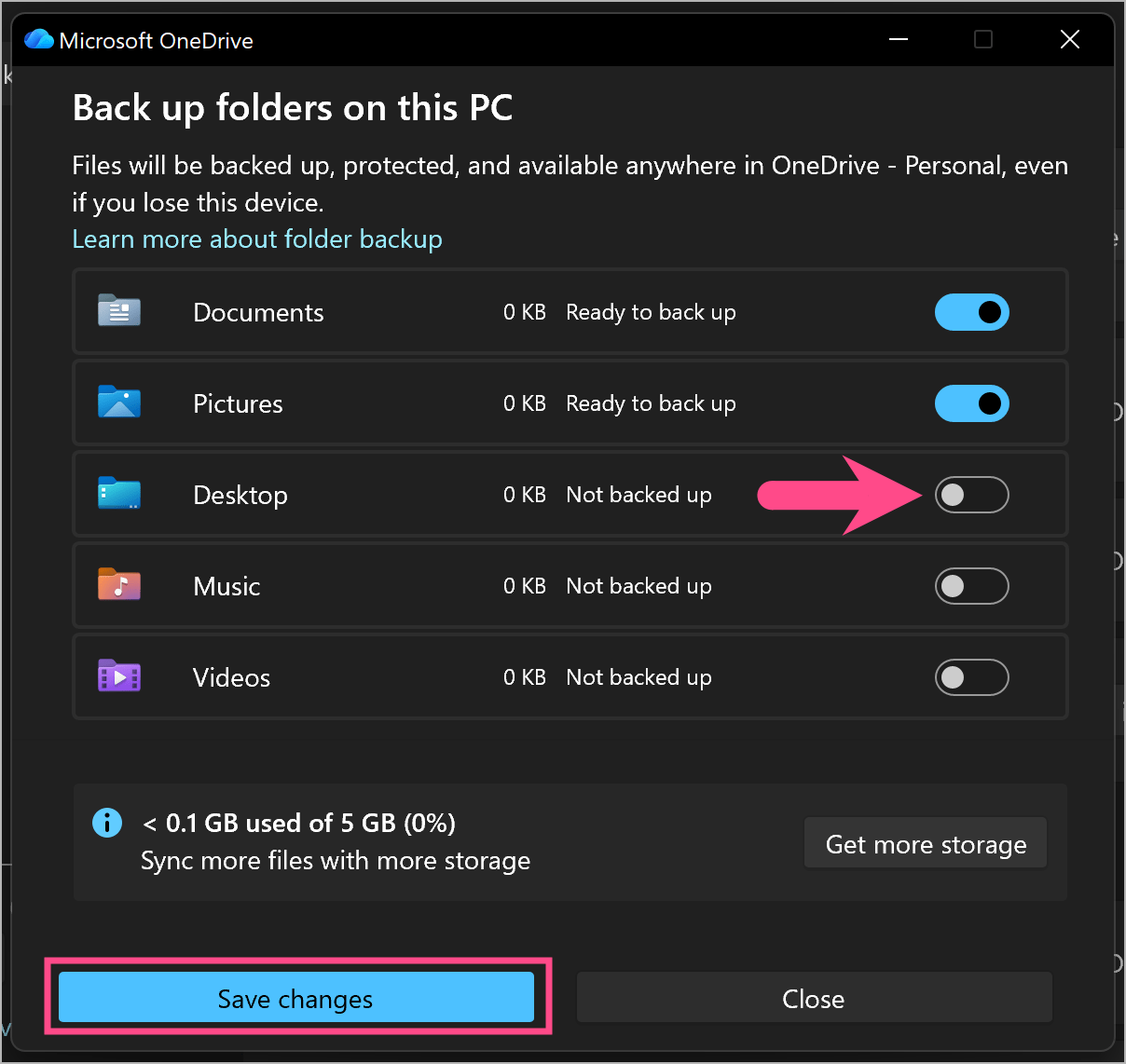
- Click Save changes.
This stops OneDrive from automatically backing up and syncing your Desktop folder.
How to Quit OneDrive
If you want to temporarily close OneDrive until you open it again or restart your PC, quitting the app is the best option.
Steps to Quit OneDrive on Windows 11/10
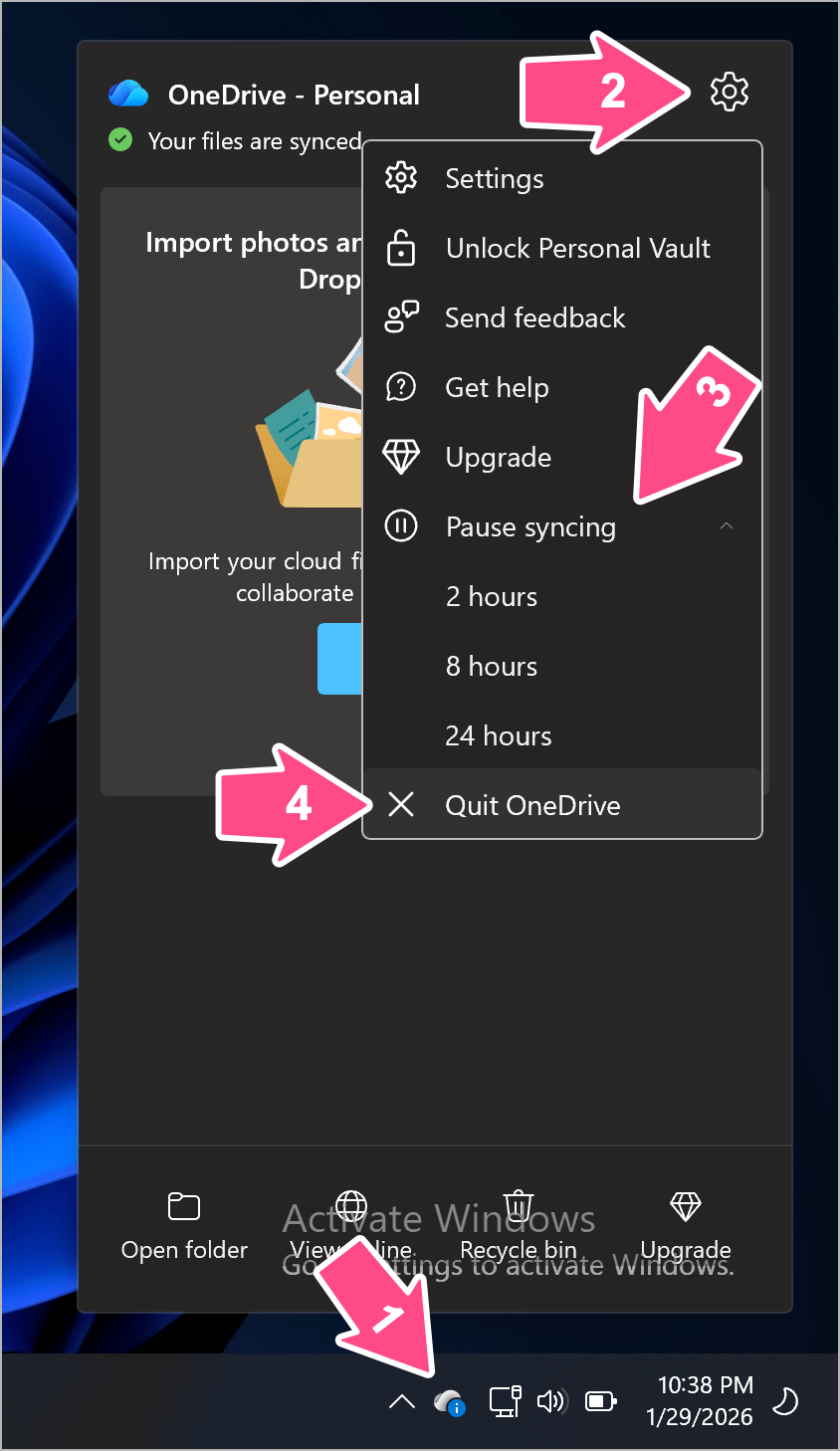
- Click the OneDrive app icon in the system tray.
- Click the Settings (gear) icon.
- Then click the Pause syncing dropdown menu and select Quit OneDrive.
- Click Quit OneDrive again to confirm.
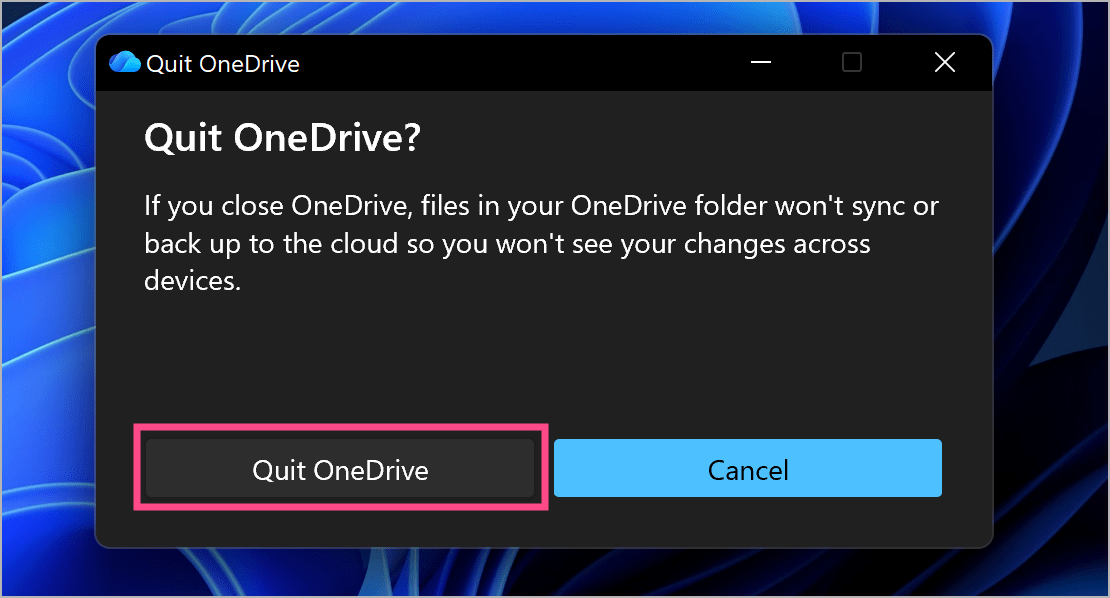
Quitting OneDrive immediately stops syncing, hides the app from the system tray, and prevents background activity until you launch it again.
How to Unlink Your OneDrive Account From a PC
If you want to sign out of OneDrive without uninstalling it, you can unlink your Microsoft account from the computer.
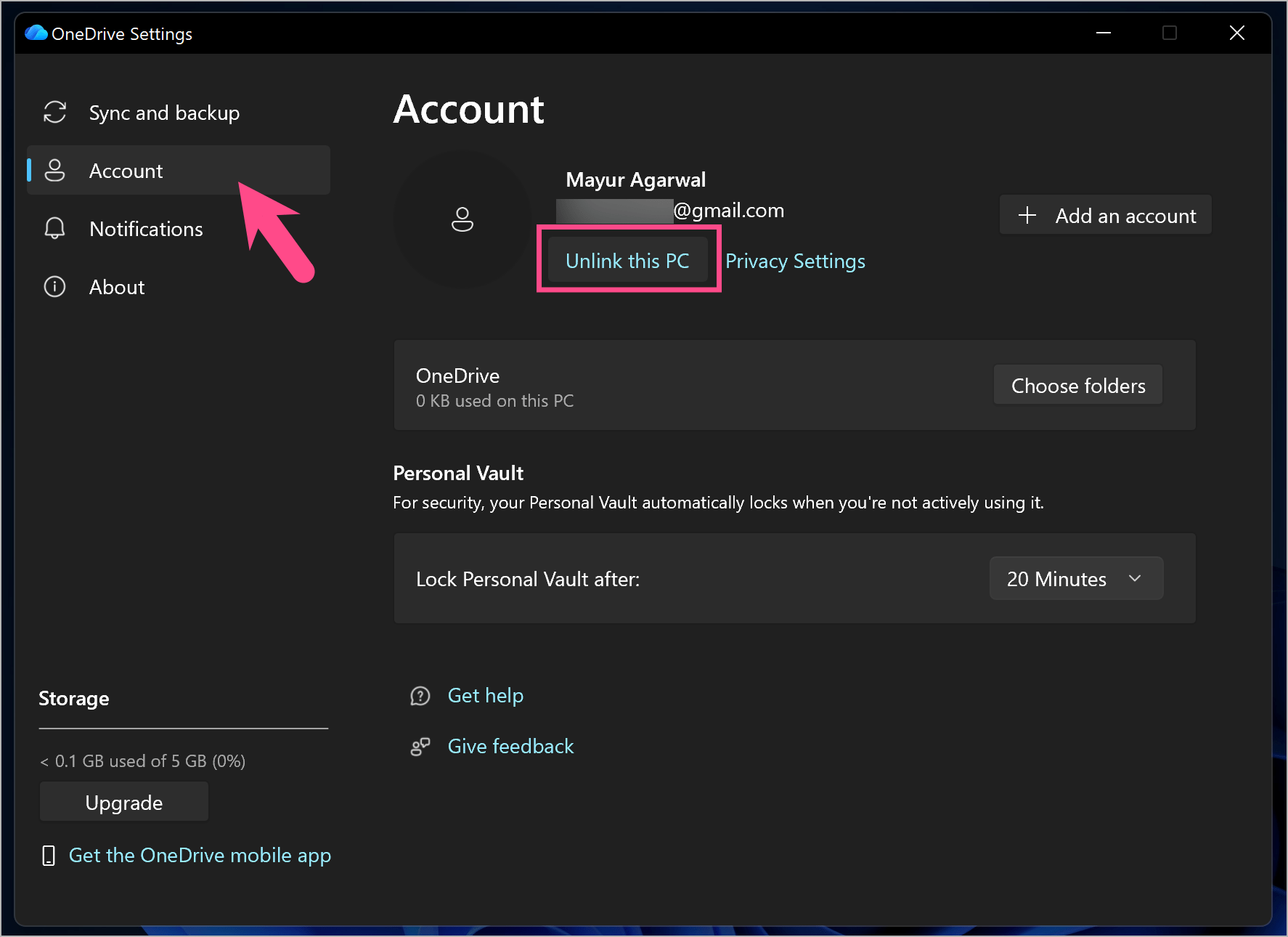
Steps to Unlink OneDrive From PC
- Click the OneDrive icon in the taskbar.
- Click the gear icon and go to Settings.
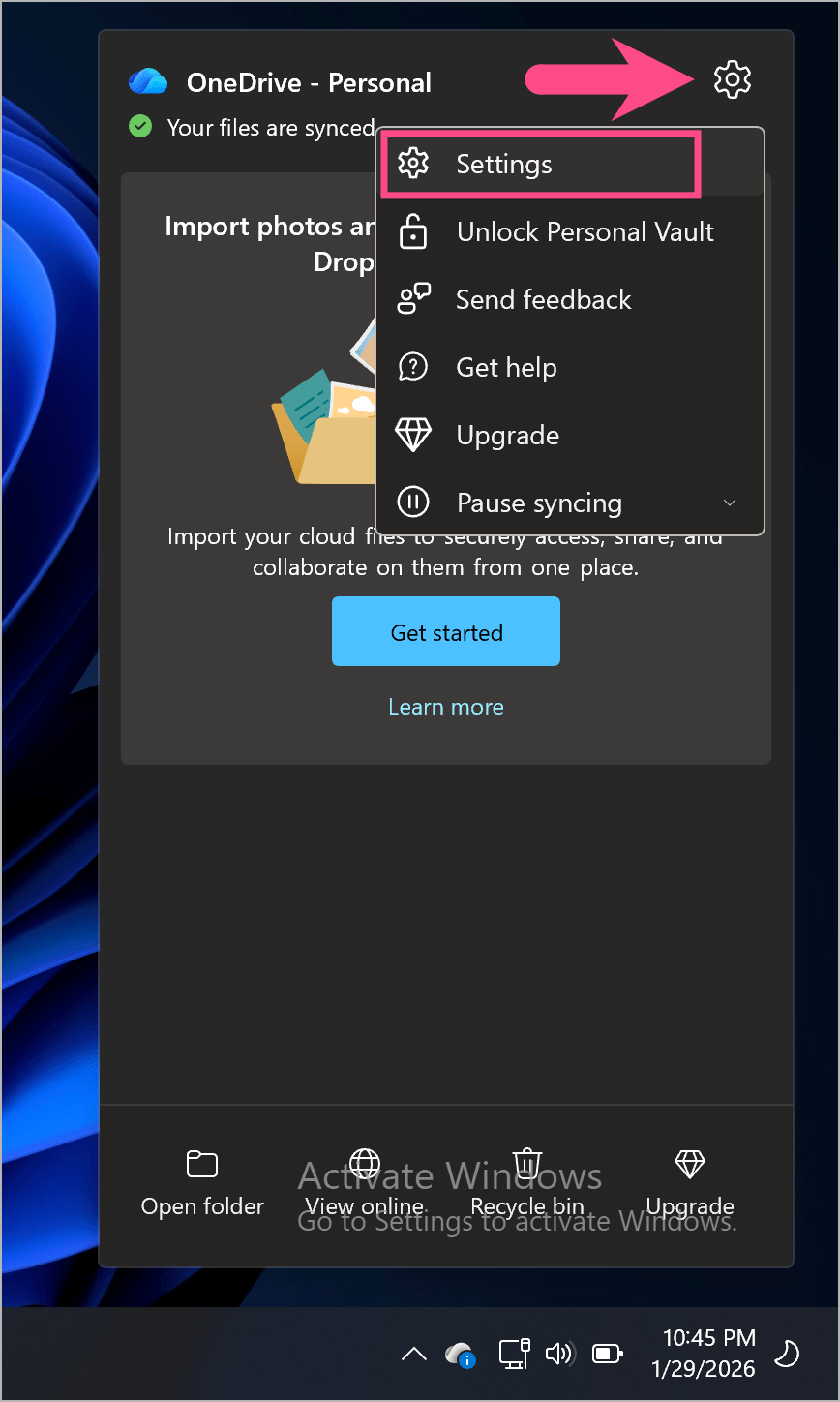
- Switch to the Account tab.
- Click Unlink this PC.
- Select Unlink account to confirm.
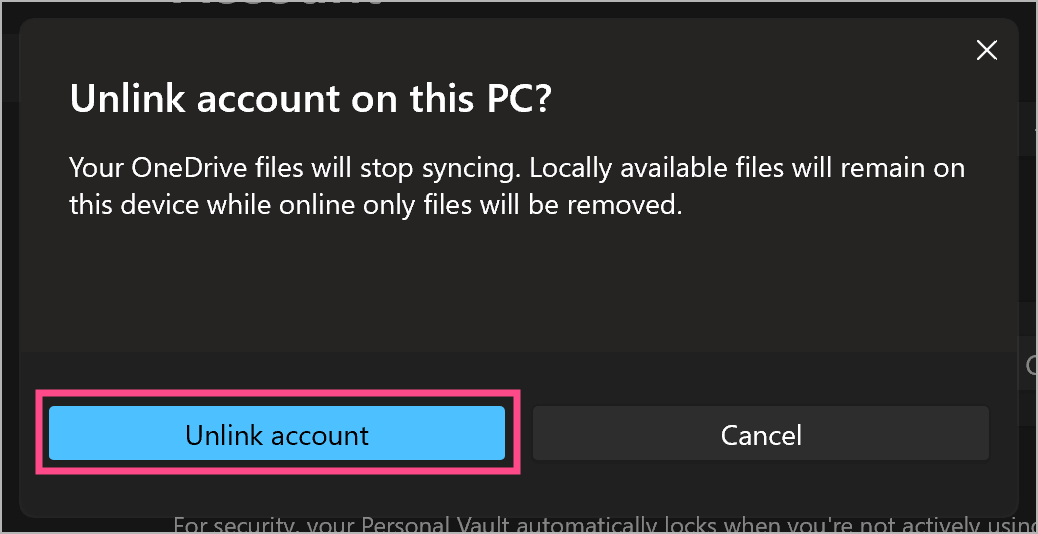
After unlinking, OneDrive will stop syncing files until you sign in again. Existing files already stored on your PC won’t be deleted.
How to Disable OneDrive at Startup in Windows 11/10
If OneDrive keeps launching automatically whenever Windows starts, you can disable it from Startup apps.
Steps to Stop OneDrive From Opening at Startup
- Press Ctrl + Shift + Esc to open Task Manager. Alternatively, right-click the taskbar and select Task Manager.
- Go to the Startup tab.
- Select Microsoft OneDrive.
- Click Disable.
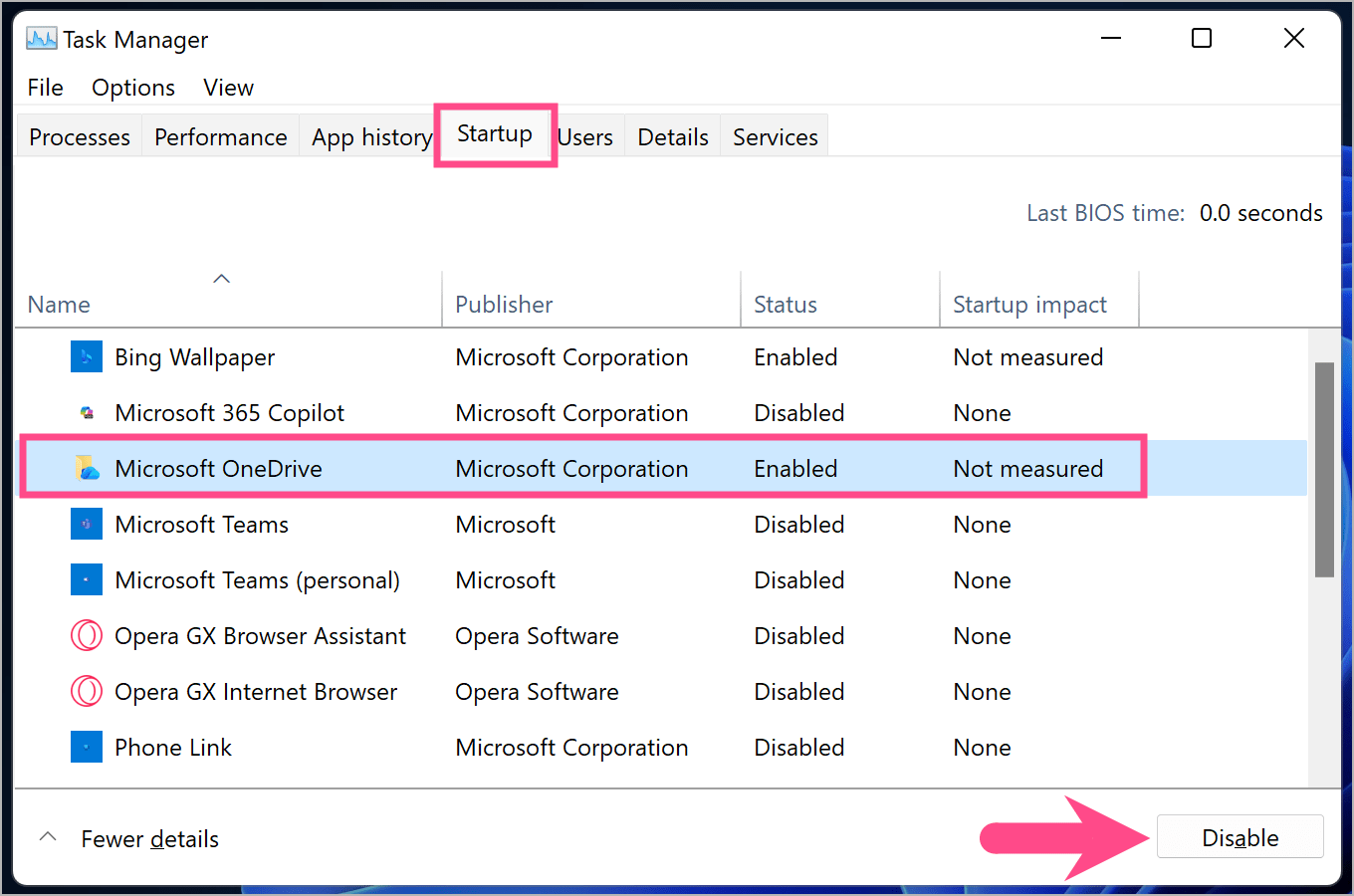
OneDrive will no longer start automatically when you sign in to Windows.
How to Completely Uninstall OneDrive From Windows 11/10
If you never plan to use OneDrive, uninstalling it is the best way to permanently turn it off.
Uninstalling OneDrive removes it from Windows, stops all syncing and backup features, removes it from File Explorer, and prevents it from launching automatically.
Steps to Uninstall OneDrive on Windows
- Quit OneDrive to close the app. (Follow the steps above)
- Click the Start menu and open Settings.
- Go to Apps > Apps & features in Windows 11 (Add or remove programs on Windows 10).
- Locate Microsoft OneDrive.
- Click the three-dot menu next to it and select Uninstall.
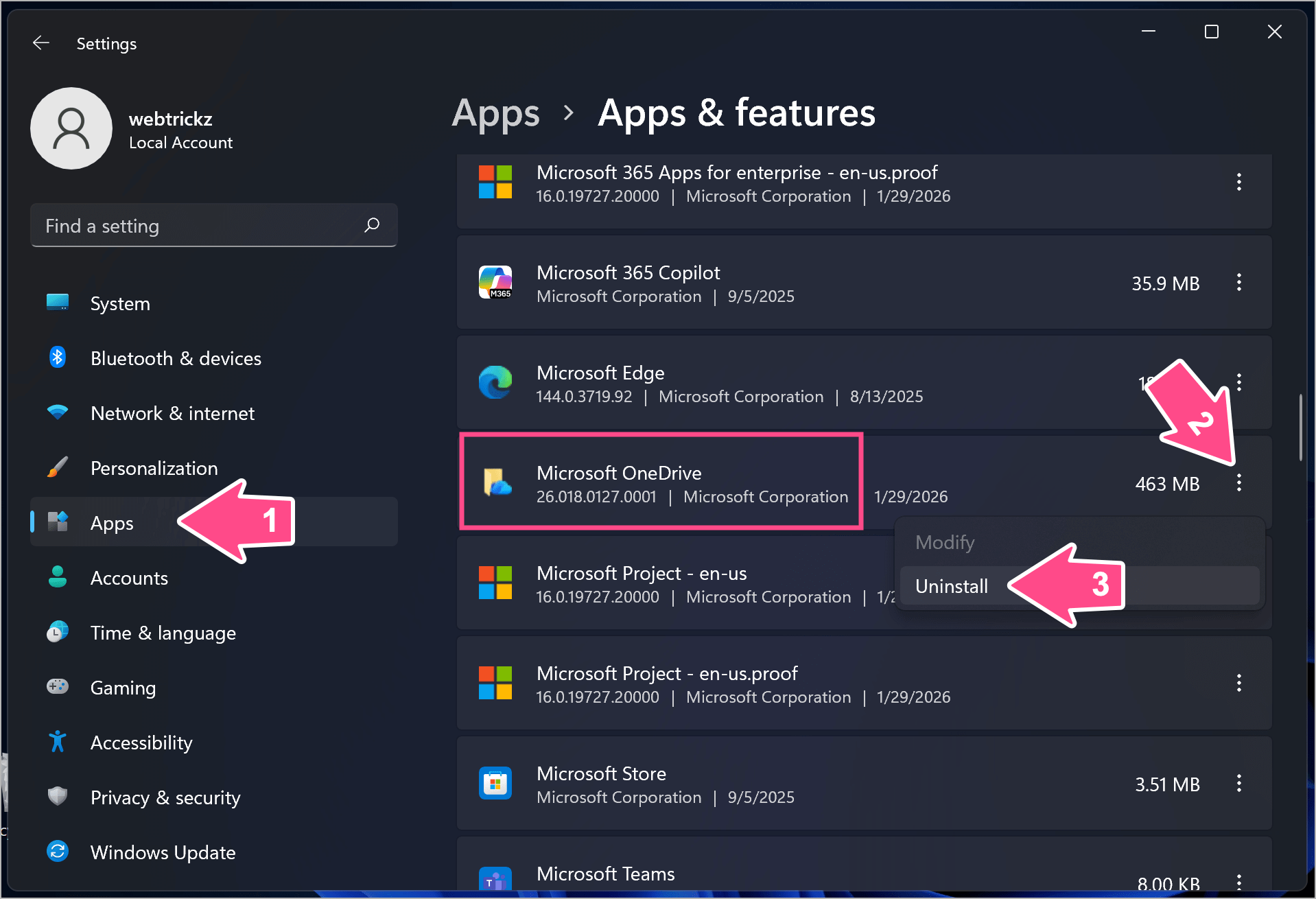
- Select Uninstall to confirm your action.
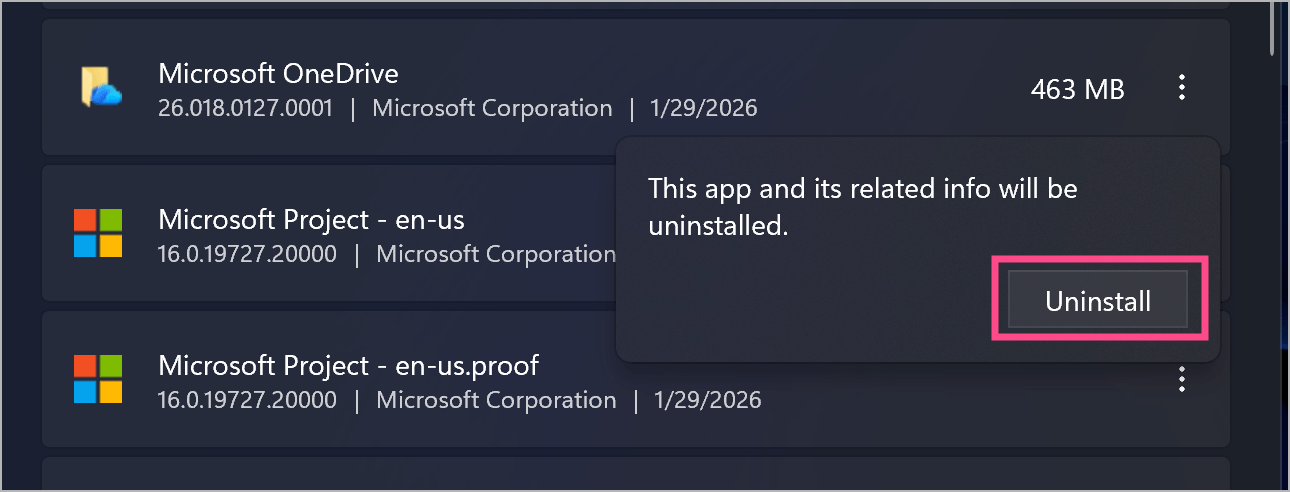
Once uninstalled, OneDrive will be removed from your PC.
Note: Some major Windows updates may reinstall OneDrive automatically. If that happens, you can uninstall it again at any time.
FAQ
Does uninstalling OneDrive delete my files?
No. Uninstalling OneDrive removes the application from your PC but doesn’t delete files already stored locally or in your OneDrive cloud storage.
Can I turn off OneDrive without uninstalling it?
Yes. You can pause syncing, quit the app, unlink your account, or disable OneDrive at startup without uninstalling it.
Which OneDrive option should I use?
It depends on what you want to do:
- Pause syncing to temporarily stop file syncing.
- Quit OneDrive to close the app until you open it again.
- Unlink this PC to disconnect your Microsoft account while keeping the app installed.
- Uninstall OneDrive to remove the app completely.
Can I reinstall OneDrive later?
Yes. If you uninstall OneDrive and later decide to use it again, you can reinstall OneDrive by downloading the latest installer from Microsoft’s official website.
Related Guides
- How to Turn Off Microsoft Family Safety on Windows 11 & 10
- How to Make Chrome Your Default Browser in Windows 11 & 10









On the DC7900 Win-10 HP desktop
OneDrive is not in the tray, in the Apps list, in the Task Manager, in the Explorer lists, or anywhere else that I have tried. Yet it insists on saving documets in a OneDrive file somewhere. All instructions on how to stop or uninstall it require that I find it in one of the above-listed places. I did find it in the Start list as Windows Backup System, but there is no option there to remove or otherwise inhibit OneDrive.
So , any other suggestions?